

Move applications forward without friction










Keep applications moving
Catch fraud in the same pass, not a separate one
Screen applications for potential fraud and deliver a recommended action inside your existing LOS and workstreams
Verification, only when it’s warranted
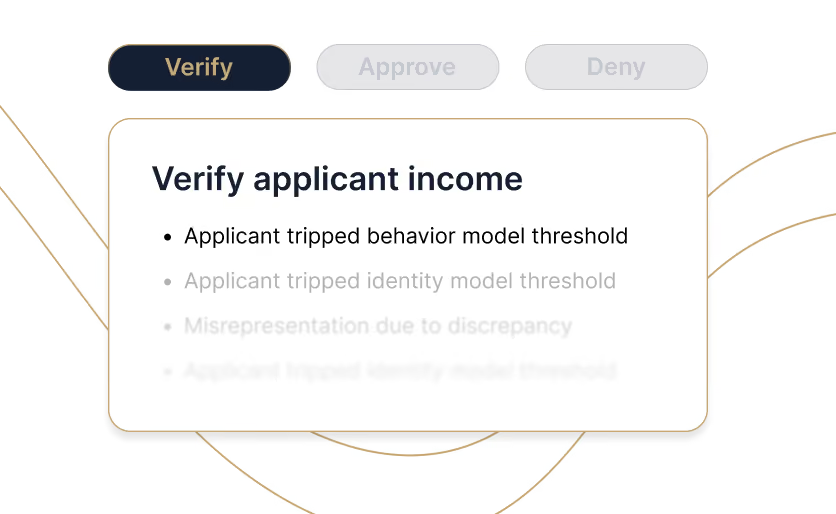
Ask for documentation only when the data flags it—reduce friction for good applicants to keep up the momentum
See what one credit union can't see alone
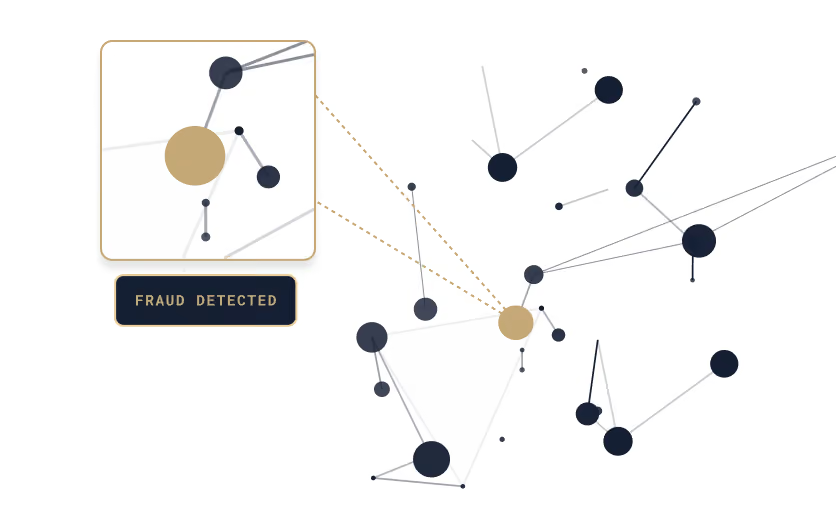
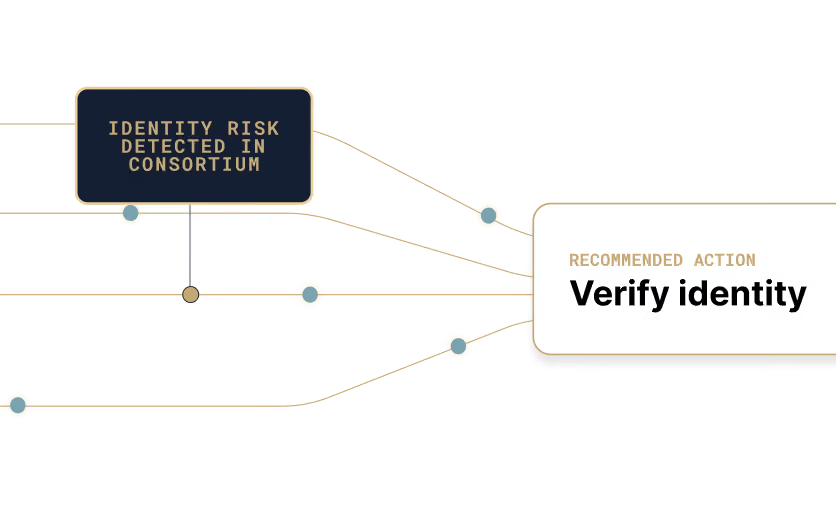
Shared, de-identified fraud consortium across a network of participating credit unions surfaces patterns no single institution's data would catch alone
Better models, better results
in early DQs and losses
of first and third party identity fraud
other providers at spotting fraud
How Zest AI helps at application
One signal, not multiple to untangle
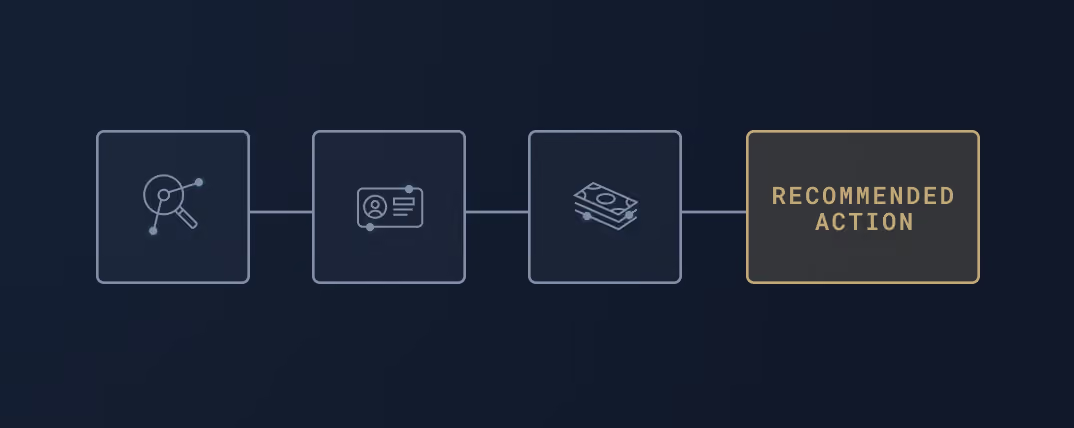
Every application is screened in real-time for behavior, identity, and income fraud. So instead of interpreting separate fraud scores, your team gets a single recommended action delivered inside your LOS.
Stay ahead of fraud that adapts
Bust-out schemes, cross-dealer applications, synthetic identities—fraud tactics evolve fast. Zest AI's models are built to catch patterns as they shift, not just the ones that were true last quarter.
See the why, not just the what
When an application is flagged, your team can see the reasoning behind it instantly in plain language on LuLu—no waiting on a support ticket or a data science deep-dive to understand a decision.

Adding Zest Protect has taken so many of those scenarios that might have tripped manual underwrite under legacy rules in our LOS and put them into an ‘approve-but-verify-one-piece-of information’ category, getting to ‘yes’ a lot more often and more quickly than ever.
John Moore
Chief Revenue Officer

FAQs
How can lenders, such as banks and credit unions, use AI to detect loan application fraud?
AI detects loan application fraud risk by screening for it at the same moment it assesses credit risk, analyzing hundreds of data points in real time instead of relying on static rules that fraud tactics quickly evolve past. Zest AI runs three models at the point of origination: a Behavior model that identifies first- and third-party malicious intent, an Income model that flags misrepresented income, and an Identity model that adds a deeper third-party and synthetic-identity layer using consortium network intelligence. The result is a single Recommended Action delivered into your LOS before a decision goes out.
Does fraud screening happen before or after the credit decision?
It's configurable. Most institutions screen for fraud in the same pass as underwriting so a single recommended action comes back, but the order (fraud-first vs. credit-first) is something we set up around your existing workflow, not a fixed sequence.
How can lenders leverage application fraud detection without increasing friction?
The friction usually comes from over-verifying—asking every applicant for documentation "just in case." Zest AI only asks for verification when the data actually flags something, so clean applications keep moving through instant decisioning while your team's attention goes to the ones that need it.
How should lenders evaluate credit risk and fraud risk together?
Lenders should use AI to screen for fraud at the same moment they assess credit risk, rather than as a separate manual step after the fact. Assessing fraud and credit risk separately slows decisions and leaves room for fraud to hide in normal-looking credit behavior. Zest AI scores both from the same application and credit data in a single pass, so a risky-but-creditworthy applicant still gets caught by fraud screening even when nothing in their credit history would raise a flag. That means one unified decision instead of two disconnected processes to reconcile.